
 English (United Kingdom)
  Arabic (اللغة العربية)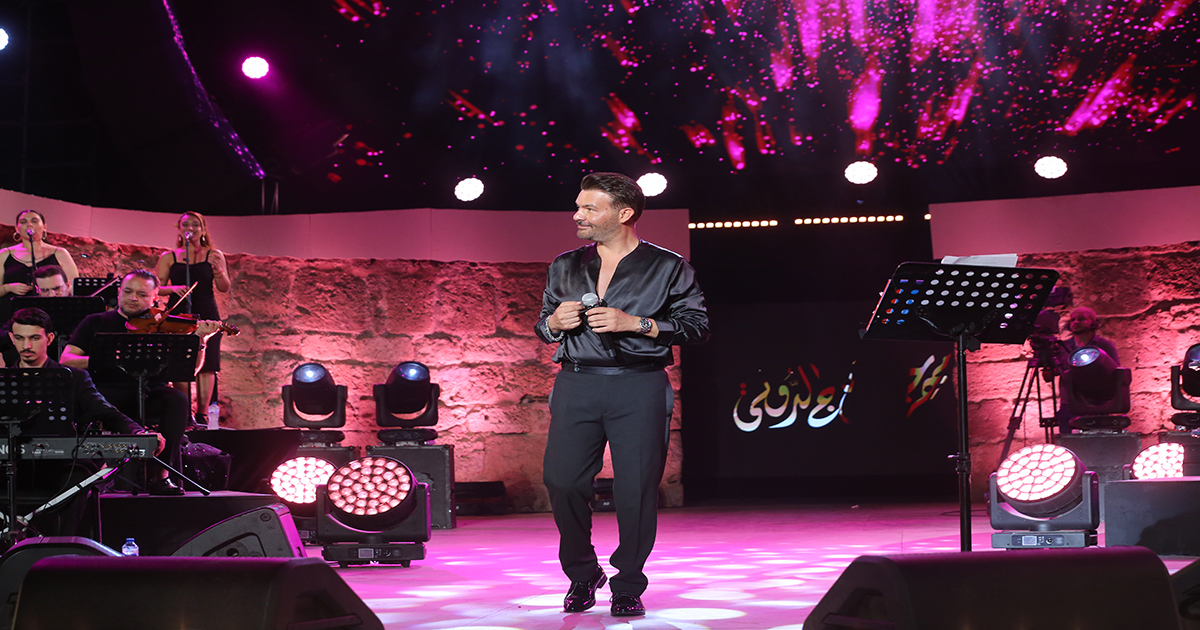
"You are better than any chemotherapy." These words, brimming with profound sincerity, were spoken by artist Rayan to his audience, encapsulating his gratitude to everyone who attended the solidarity concert on the evening of Sunday, August 2, 2026, as part of the 60th edition of the Carthage International Festival. This was more than a musical performance; it was a cultural and humanitarian evening, featuring the National Orchestra of Tunisian Music conducted by Maestro Youssef Belhani—a night where art met solidarity, beauty met hope, and voice carried a message deeper than any melody.
Before the concert, a short film was shown documenting Rayan's visit to the oncology department at Salah Azaiez Hospital. In this spontaneous meeting, the artist encouraged patients to resist the pain of chemotherapy and urged them to hold on to life and joy, reminding them that there is still room for hope and dreams. The visit was a declaration of intent, confirming that the goal of this evening transcended entertainment to alleviate the suffering of others and share their journey of hope.
Since music is one of the metaphors of hope—a cry for life and a total rejection of all forms of surrender—Lebanese artist Rayan has fought this insidious disease through music, and through it, he wishes to convey a message of hope to all those afflicted. Song is healing, and romantic words are the best balm to heal the soul and help it soar again. Rayan understood this intimately after his long battle with illness, which made him believe that art is not mere entertainment but an act of resistance for life.
At Carthage, Rayan sang of love, joy, and the teachings of beauty before an audience that came to show solidarity and listen to romantic and tarab-infused songs. Rayan returned to Tunisia after 18 years of absence, and after surviving cancer, he decided to make his voice an artistic message defending cancer patients. He chose to turn his art into a mission to support those suffering from the disease, believing that artists have a social responsibility and a duty to spread a culture of hope.
Rayan knew pain intimately, so he chose to be a voice of hope. From the Carthage stage, he sang and thanked his audience for their support during his early days. He said: "Singing at Carthage is an honor for any artist. Years ago, I sang here; I was at the beginning of my career, and the Tunisian audience encouraged me. As a token of gratitude to this country, I chose to return to its stage." His words were a sincere expression of the strong bond he shares with his Tunisian audience, who played a role in his artistic journey from the very start.
Rayan sang for Tunisia, celebrating its audience, loving its land, and dedicating an hour and a half of exceptional artistic connection. He described Tunisia as "the princess of the Arabs" in a song with Lebanese lyrics celebrating the country's charm—a moment where the two brotherly nations united in the embrace of music. Rayan, the artist and humanitarian, exchanged dreams with his fans, sharing the singing. He performed a selection of his own songs: "Kanet Rouhi," "Ahla Gharam," and "Hakyou Aineik"—songs that form part of the memory of the 2000s generation, as 2004 was Rayan's year of success, and this audience witnessed those beginnings and returned to witness this new milestone.
He also performed for the Sultan of Tarab, George Wassouf, singing "Saber wa Rady" and "Khasert Kel El Nass," and for Fairuz, "Nassem Alayna El Hawa"—songs through which he proved his vocal strength and commanding stage presence. These segments served as a tribute to the pillars of Arab tarab, affirming that Rayan, despite his difficult journey, still carries that beautiful legacy in his voice; indeed, the experience added new depth and artistic maturity to his performance.
The evening of August 2 was an appointment with joy and hope, a meeting with an artist who chose the path of humanity, loved his music, and understood that his social and humanitarian mission is his next destination. He sang spontaneously, and the audience responded with genuine emotion, with the applause echoing beyond the terraces of Carthage. The audience were not mere spectators but partners in this humanitarian message, affirming that when art is sincere, it can transcend all boundaries.
Rayan returned after his journey of illness and recovery, returning to his audience, understanding that artists have a sacred duty to fulfill. He chose to sing in Tunisia and donate to children whose pain he knows intimately because he lived it—he understands the details of suffering and its impact on the psychological and nervous system. Rayan was not just a singer on the Carthage stage; he was a standard-bearer of humanity, smiling, giving those who watched him immense energy of hope and survival. It was an unforgettable evening—a meeting of hope despite pain, a living testament to recovery through singing and art.
It is worth noting that the August 2 concert was organized in cooperation between the Carthage Festival and the Tunisian Association for the Promotion of Palliative Care, an organization dedicated to improving the quality of life for patients in advanced stages of illness, as part of the festival's social and humanitarian mission. This partnership was clear evidence that the festival, in its 60th edition, was not merely a celebration of art but a platform for noble human values, affirming that art is a message and that hope is stronger than any pain.